HIPERIONE
Hi, I’m Hiperione
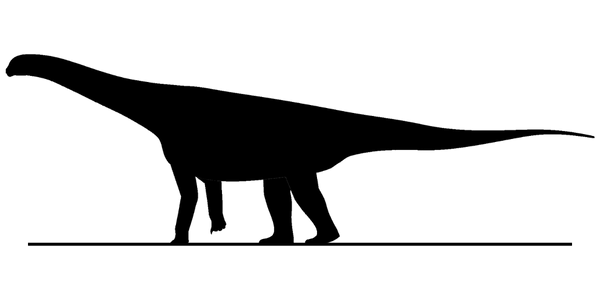
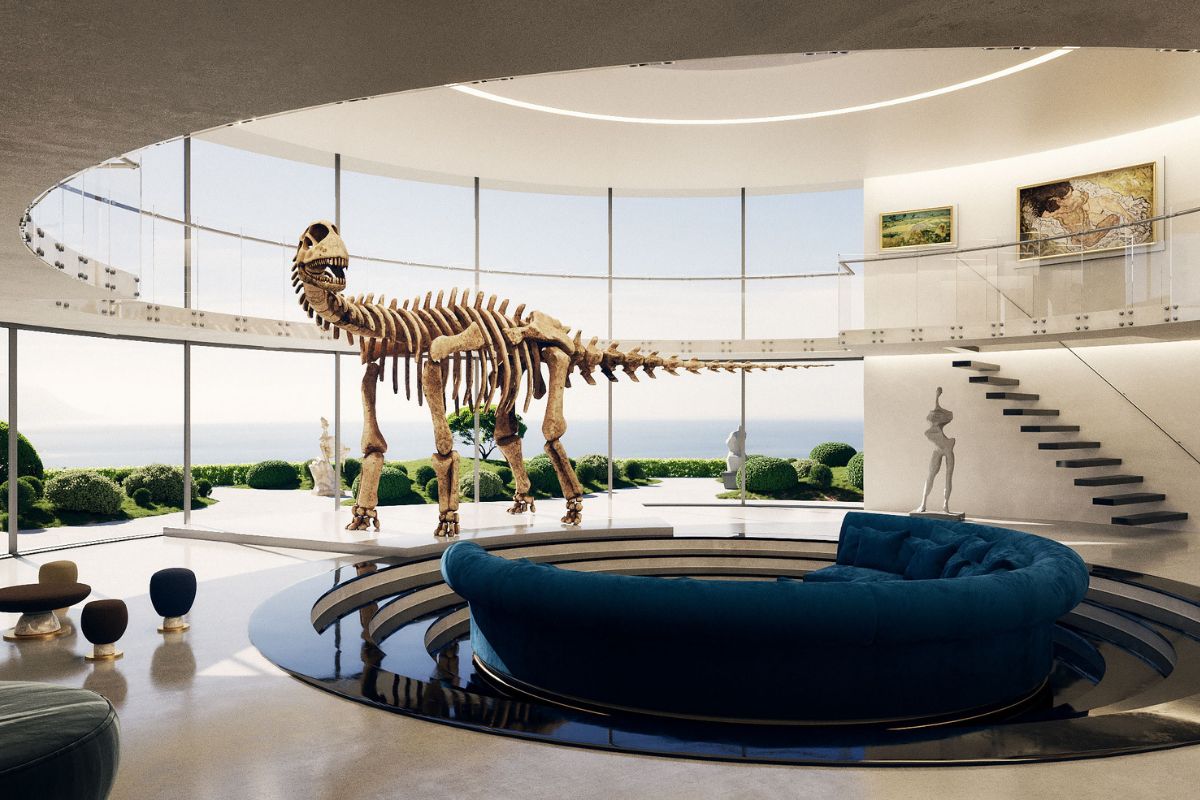
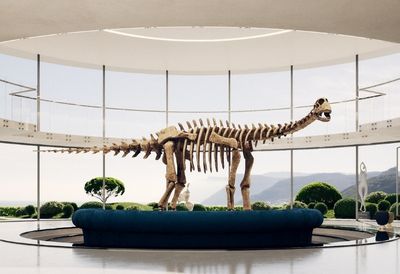
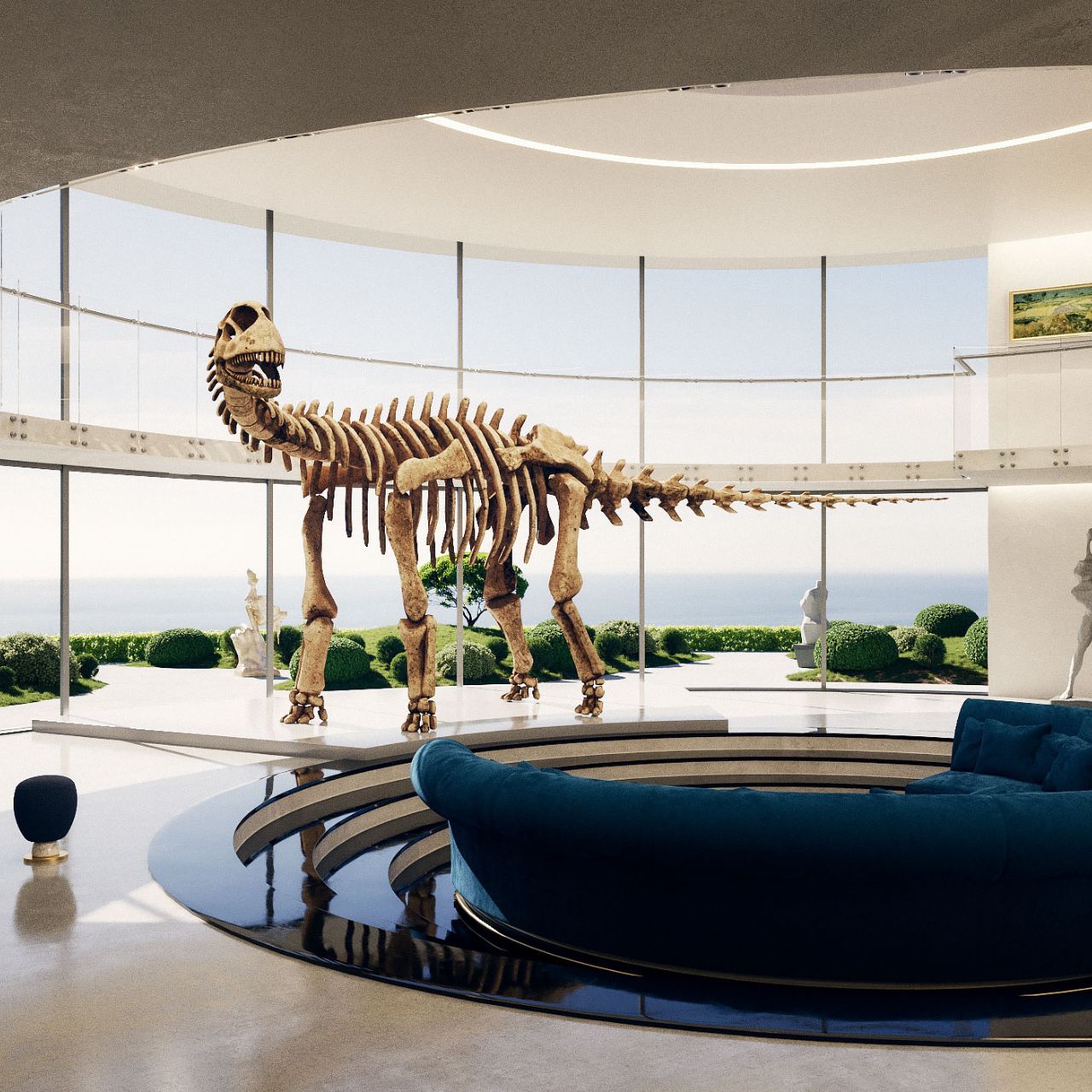
I am a basal Sauropo, traceable to the Species Tazoudasaurus Naimi. I am 175 million years old and 3.5 meters high, 11 long and 2.5 wide. My bones are more than 70% original and I weigh about 1.200 kg.
Description
The distinctive feature of Hyperion is the ratio between length and width of the bones of the lower limbs. These are rather slender bones when compared to those of similar animals that lived in the Cretaceous. The paleoenvironment of reference is that of the tropical alluvial plains.
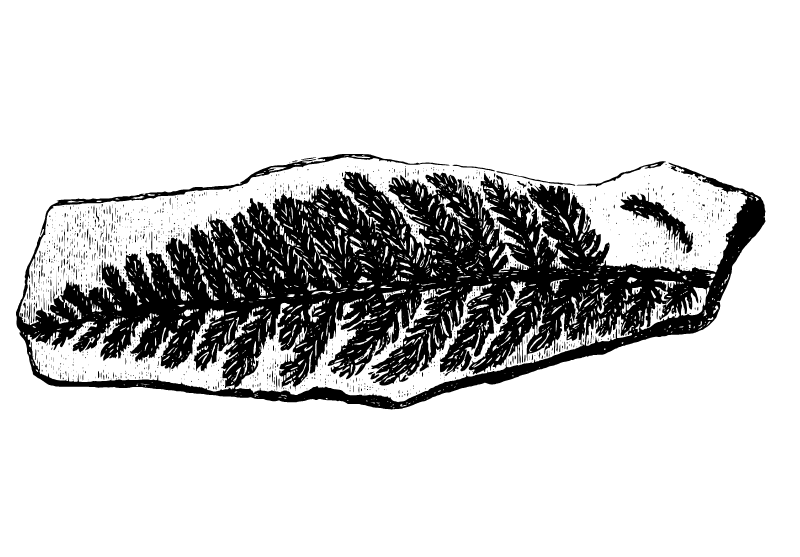
The determination took place through the analysis of the sediment, plant fossils and microfossils found together with the remains.
Finding
The discovery of the bones was found in an elongated rectangular area 25 x 8 meters in dimension. The find appeared as a collection of bones partially connected and the distribution of the find suggests that the disbursement occurred due to the flow of surface water. This hypothesis is confirmed by the type of sediment found with the remains. The dimensional along with the partial anatomical connection refer to a single specimen of the dimensions indicated below. Where possible the original connection has been preserved.
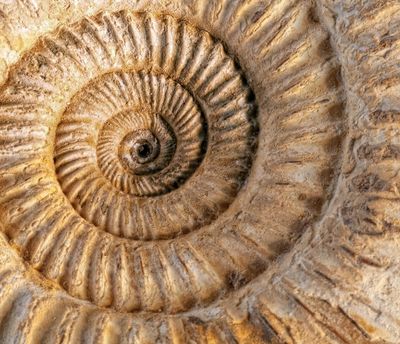
Typology
Basal Sauropod
Species
Traceable to Tazoudasaurus Naimi
Approximate Age
175 million years
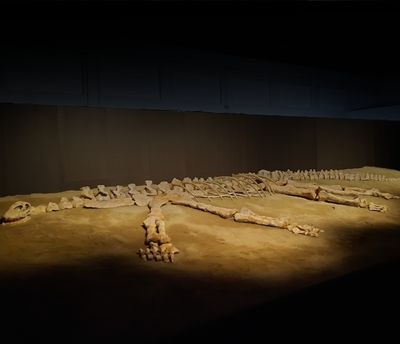
Bone Percentage
Fossils Present: Over 70%
Weight
Estimated 1200kg
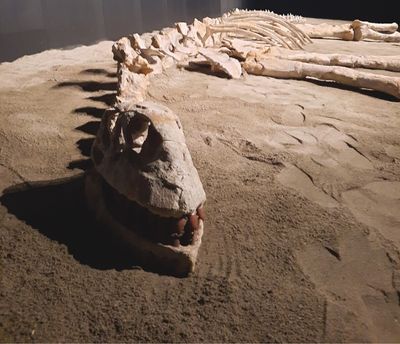
Dimensions
- Length: 11 meters
- Height: 3.5 meters
- Width: 2.5 meters
Hiperione Support Structure
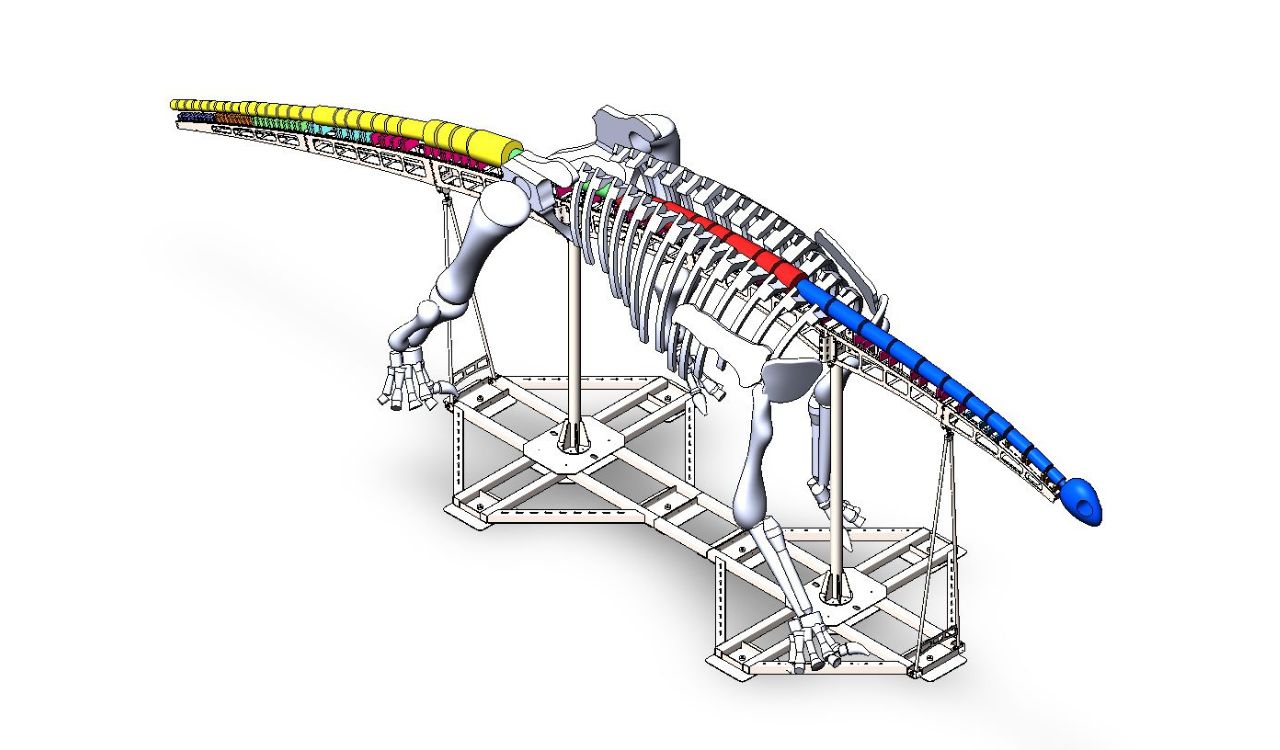
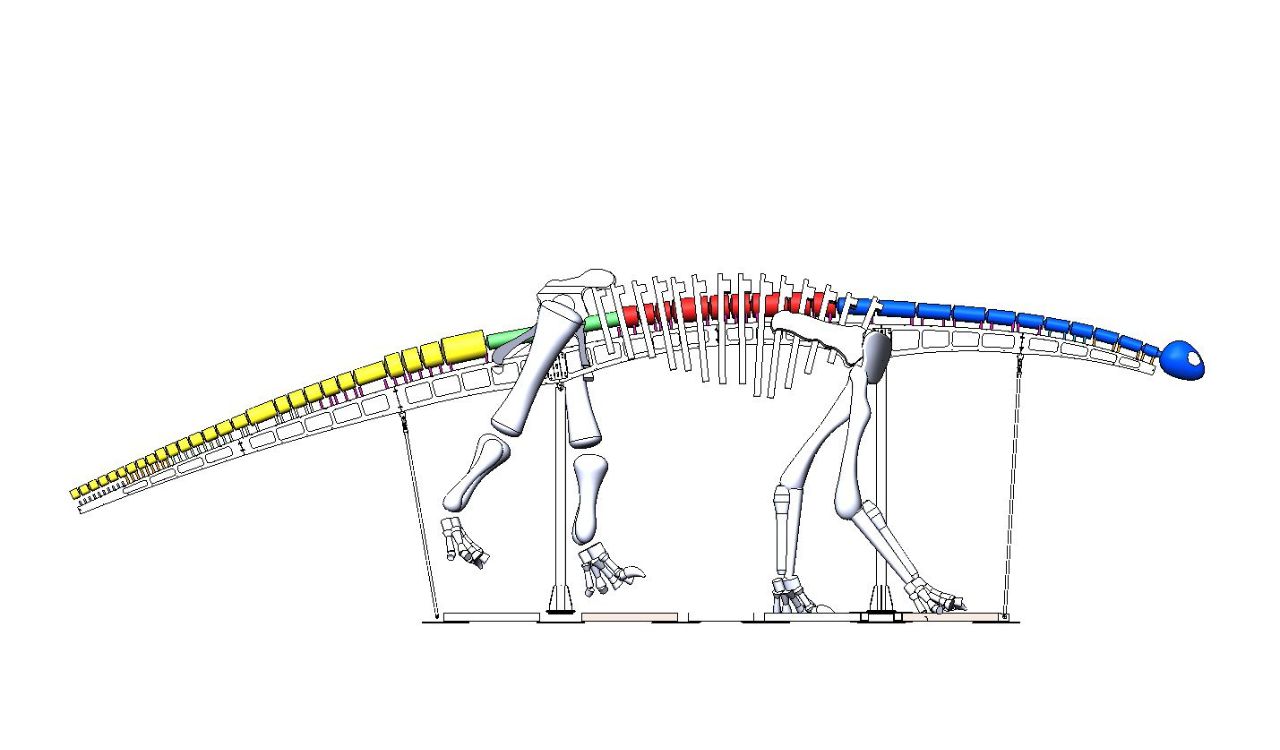
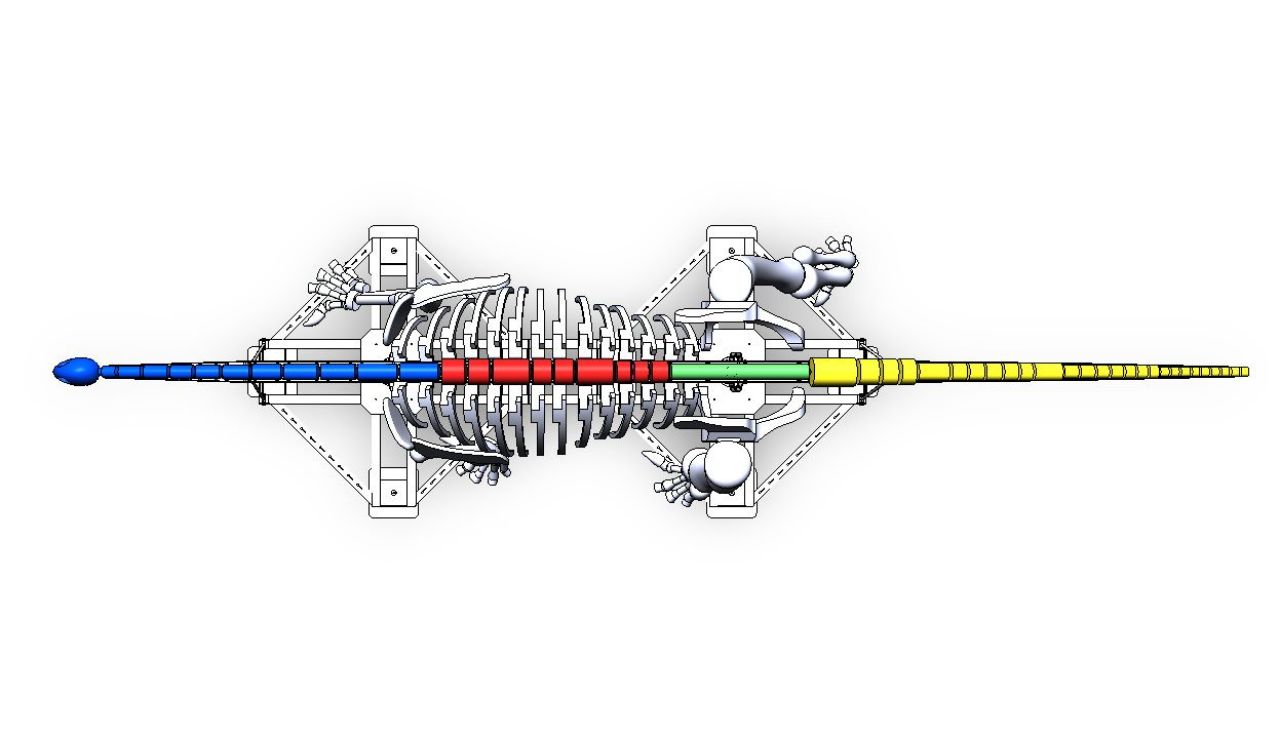
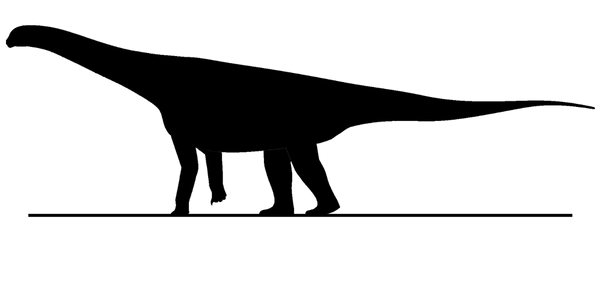
Fossil skeleton of the Sauropod
The bones were partially incorporated in the rocky sediment which often covered the bones, generating a very hard nodule of rock. Some missing sections of the bones are attributable to the excavation procedures implemented in a rather hostile mountain environment. The missing pieces of the skeleton, on the other hand, are attributable to the dispersion that took place in the era prior to fossilization.
The bones were assembled by inserting metal plugs to ensure safe maneuverability. The consolidation took place using polyurethane and epoxy adhesives applied both by casting and by infiltration. A water-based epoxy grout was used to finish the surfaces then chlorinated totally with powder oxides. A water-based acrylic glue with natural pigments added was used for the final restoration and a glossy nitro resin was used for the protective layer. The procedures and materials used will ensure adequate stability over time if the skeleton is stored and displayed correctly.